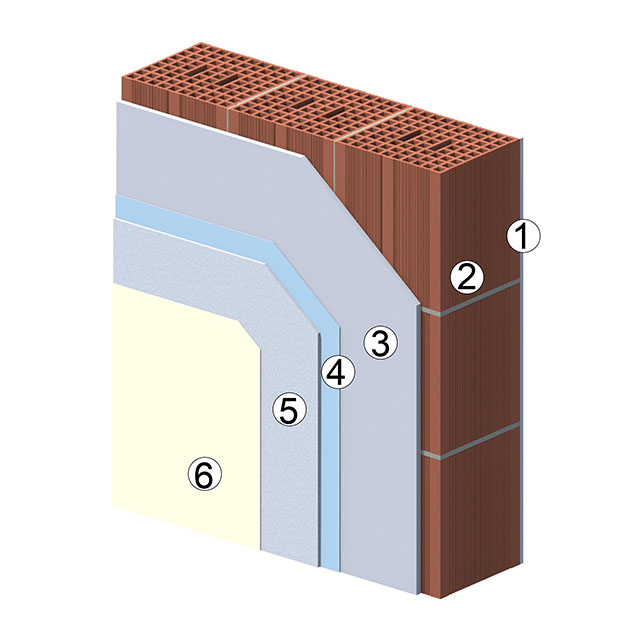
Skim coat over interior or exterior traditional plaster.
Structure type
External walls, partitions or floor slabs plastered with traditional plaster based on hydraulic binders (lime and cement, hydraulic lime, natural hydraulic lime).
Detail
Interior or exterior skim coat and finish over existing finishes or paints.
Application cycle
- Interior or exterior plaster.
- Brick wall (or alternatively concrete, concrete blocks, solid brick, aerated concrete blocks, wood-cement permanent formwork, etc.).
- Existing hydraulic binder plaster (lime-cement, hydraulic lime, natural hydraulic lime).
- Existing mineral or plastic finish, or paint.
- Skim coat of RALLK Rasante K or alternatively RALLK K OttO.
- Troweled interior or exterior finish with RALLK Marmo K, or finish with a finishing coat, powder mineral finish, acrylic, siloxane, lime or silicate paste finish, or lime, siloxane, acrylic or silicate paint, as set out in the specifications.
Additional information
- Check that the existing plaster is cohesive and well bonded to the wall, and free of dust, salt efflorescence, mold, soot, other organic material, oil, grease or anything else that could impair the bond between the skim coat and the plaster.
- On cracked plaster, check the cause and stability of the cracks and embed a primed glass fiber mesh of more than 150 g/m2 in the skim coat (see step 5).
- For cracks wider than 2 mm, once they have been confirmed as stable and NOT structural, we recommend filling them first with RALLK Rasante K, applied with a spatula, 12 - 24 h before the skim coat.
- See the individual product data sheets for application methods and precautions.